

When I began my career in 2018, I was fortunate enough to join a graduate development program that provided me with a dedicated mentor to ease my transition from university to professional life. She was an experienced senior consultant who offered thoughtful, constructive feedback during our one-on-one check-ins. I always knew I could go to her for advice, and that sense of support gave me confidence in navigating my early career challenges.
After completing the program, I switched jobs and went several years without an official mentor. In hindsight, I’m beginning to see just how much I may have missed. While I later immersed myself in books, believing that self-learning could compensate, I now understand that mentorship offers something books cannot: real-time feedback, personalized advice, and the ability to engage in meaningful discussions tailored to my unique situation.
Fast forward to 2024—I attended a meet-up in Amsterdam for like-minded professionals eager to connect and exchange ideas. I expected a great keynote speech and maybe some casual networking, but that day turned out to be transformative. A world-renowned speaker took the stage, delivering thought-provoking insights, while the interactive sessions overflowed with wisdom I hadn’t even realized I needed. In one of the breakout rooms, I shared a team-specific challenge I was grappling with at the time. The group listened attentively and offered invaluable advice on how to improve the situation. I walked out of the venue buzzing with energy, filled with inspiration, and armed with fresh perspectives for my role. As I headed home that day, I couldn’t shake the thought – I had been figuring things out on my own for years, never tapping into the power of mentorship.
That moment was a wake-up call. Since then, I’ve been intentional about surrounding myself with mentors – people who challenge and support me, who share their wisdom and keep me accountable.
A couple of months after joining my current employer, I was pleasantly surprised to hear about the launch of a new mentoring program. This 12-month initiative aims to accelerate talent at specific grades, pairing selected participants with members of the Management Team (MT). Initially, I was hesitant—maybe even a little naive—wondering, “Why should I sign up as a mentee? Don’t I know enough already?” But that was just my ego talking and I quickly realized I had stepped into a completely new environment, and learning from someone seasoned and respected could only benefit me. With over 200 colleagues applying, spots were limited. I’m deeply grateful to have been selected and was later told that my place in the program reflected the motivation and ambition I’d demonstrated.
In his book Hidden Potential, Adam Grant explains that one of the keys to unlocking your hidden potential is having ‘scaffolding’ structures in your life. He describes these structures as “a temporary support system that enables us to scale heights we couldn’t reach on our own.”
In other words, when we feel overwhelmed by circumstances, stuck, or as if the odds are stacked against us, turning to mentors can provide that much-needed nudge in the right direction. The right support at the right moments can help us navigate challenges and continue to grow.
Looking back, I can recall several moments in my career when I felt stuck and unsure of how to move forward. Having scaffolding in place could have helped me recognize and explore paths I wouldn’t have seen on my own. Without that outside perspective, it’s easy to get caught in the details and mistake the trees for the forest.
Later in his book, Grant also describes mentors as guides, reminding us that “the point of engaging guides isn’t to blindly follow their leads. It’s to chart possible paths to explore together.”
Once you’ve identified mentors or guides in your life, offer them as much context as possible about your circumstances. Doing so may trigger them to reflect on their own journey – the pivotal moments, lessons learned, and experiences that shaped them. With a better understanding of your unique situation, they may help you uncover potential paths to explore – some clearly visible, others less obvious.
It’s also worth considering different types of mentors – having someone at work whom you admire is valuable, but so is learning from someone who leads their family well or excels in a sport you practice after hours. Different mentors bring different insights that can help you advance in meaningful ways.
In his book The Juggling Act: Bringing Balance to Your Faith, Family, and Work, Pat Gelsinger (former CEO of Intel) reflects on the immense value that mentors brought to his life. Figures like Andy Grove helped launch his career through technical mentorship, while others served as lifelong personal and spiritual guides. For Gelsinger, mentors weren’t merely professional advisors – they were life guides who helped him stay grounded in his core values while balancing the competing demands of faith, family, and work.
I’ve always been captivated by those who take on the challenge of summiting mountains like Everest or Kilimanjaro. But I can only imagine that the tougher the climb and the higher the peak, the more crucial it becomes to have different perspectives helping you find the best path forward. And even once you’ve reached the top, support remains vital – because the summit isn’t the end. As Ryan Holiday writes in Ego Is the Enemy: “Here we are at the top of a mountain we worked hard to climb – or at least the summit is in sight. Now we face new temptations and problems. We breathe thinner air in an unforgiving environment.”
Reflecting on my own journey, I view my career in a similar way – filled with uncertain terrain and steep climbs. Looking back, I wish I had welcomed more guidance earlier on, instead of trying to navigate everything on my own. Now, I embrace advice from mentors who see things from different angles, because just like on a mountain, having multiple perspectives can make all the difference.
By now, I really hope you’re sold on the idea of having a mentor (or several) in your life. But maybe you’re wondering—how do you actually make this happen? Here’s some practical guidance to help you take the next step and formalize a mentorship.
Step 1: Think about your needs
Before reaching out to someone, take a moment to clarify what you’re looking for. Are you seeking career advice, industry insights, leadership guidance, or general life wisdom? Knowing this upfront will help you find the right mentor and get the most value from your conversations.
Step 2: Look within your network (and if needed beyond)
Now that you know what you’re looking for, scan your existing network for potential mentors. Who do you admire? Whose career path or mindset resonates with you? Ideally, this person already knows you — perhaps a current colleague, a former coworker, or someone you’ve interacted with in the past. That existing connection gives you a head start in building trust and rapport. That said, meaningful mentorship doesn’t always require a pre-existing relationship. You can also reach out to someone new — someone whose experience inspires you — as long as you’re prepared to invest time in earning trust and creating a strong foundation.
Step 3: Make your request known
Once you’ve identified a potential mentor (or several), reach out thoughtfully and genuinely. Express why you admire them, where you are in your journey, and why mentorship from them would be valuable. When asking if they’d be open to mentoring you (and taking you under their proverbial wing), they’ll likely feel flattered to say the least. But if they do seem hesitant, reassure them that you’ll respect their time by setting clear agendas upfront and keeping the discussions productive.
Step 4: Establish a meeting rhythm
Decide on a schedule that works for both of you. At the very least, aim for quarterly check-ins – but if you require more frequent touch points, agree on a cadence that makes sense.
One of the advantages of living in a post–COVID-19 world is how accustomed we’ve become to virtual meetings. This is great news because it broadens your network of potential mentors beyond geographic limits. For example, in 2025, I reached out to the former Chief Data & Analytics Officer of Capitec Bank, now at Standard Chartered in Singapore. By following the steps outlined above, I was able to reconnect, gain his support, and set up 45-minute virtual mentoring sessions every three months.
Concluding: There will come a moment when you feel ready to give freely—of your knowledge, your wisdom, your experience—and be the mentor you always wished you had. After all, as Adam Grant writes in his book, “It’s not just about soaking up nutrients that help us grow; it’s also about releasing nutrients to help others grow.” Mixed martial arts pioneer and multi-title champion Frank Shamrock offers a powerful framework—not just for fighting, but also, I believe, for mentorship. His system, plus, minus, and equal, provides a blueprint for us: learn from someone more skilled than you, mentor someone less experienced by sharing your knowledge, and engage with a peer at your level who can challenge and push you further.
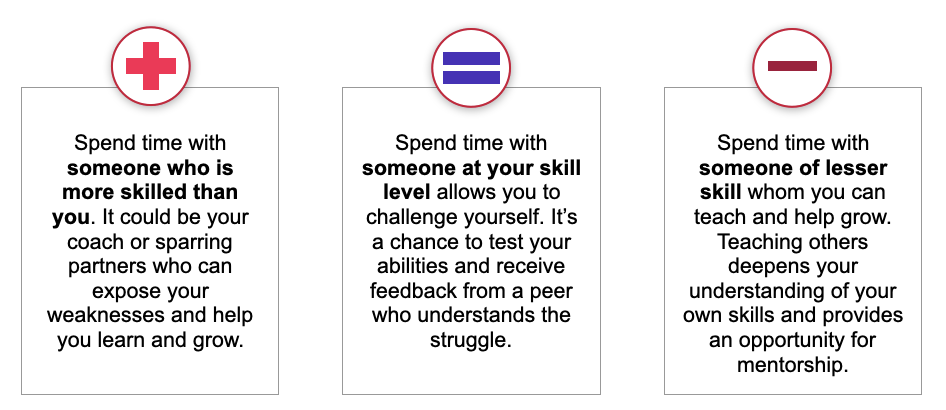
This post focused primarily on the “plus”—seeking those who can guide you. But don’t stop there. True growth, in mentorship and in life, comes from the full spectrum. Be someone’s “plus.” Reach out to your “minus” and help them grow. And don’t underestimate the value of the “equal”—the peer who challenges you, sharpens you, and keeps you grounded.
If you haven’t found a mentor yet, why not take the first step today? It could be one of the most valuable investments in your personal and professional growth. Already have a mentor? Take a moment to reflect on their impact—what have they helped you see, overcome, or achieve? Feel free to share your experience. After all, great guidance deserves recognition.
 The Young Professional
Leave a comment