
In one of my earlier blog posts (see Iron sharpens iron…), I briefly shared about the heartbreaking loss of one of my oldest and dearest friends when I was just 17. That tragedy marked a turning point in my life—I became an overnight adult, forced to navigate grief, confusion, and pain far beyond my years.
What I haven’t shared until now is that my friend had been preparing for the “Kalahari Vasbyt.” In Afrikaans, Vasbyt means “to hold on” or “to persevere”—a fitting name for what lay ahead. The Vasbyt is an 18-day endurance experience in the remote Kalahari Desert, a vast savanna in southern Africa. Imagine a military-style training program designed to push you past your physical and mental limits. That’s the Vasbyt.
Just a day or two after my friend’s passing, I received a call from his parents. They asked if I would consider taking his place on the tour. I didn’t hesitate. I said yes—partly as a tribute to his life, and partly because I wanted to make him proud.
What I didn’t realize then was how unprepared I was. I wasn’t fit. I wasn’t mentally strong. I was grieving. And yet, I went. I decided to show up because my friend couldn’t.
Trust me, there were days I wanted to quit. Days when my body screamed for rest and my mind begged for escape. But something kept me going. I held on. I persevered. I eventually finished the program together with my comrades (see below).
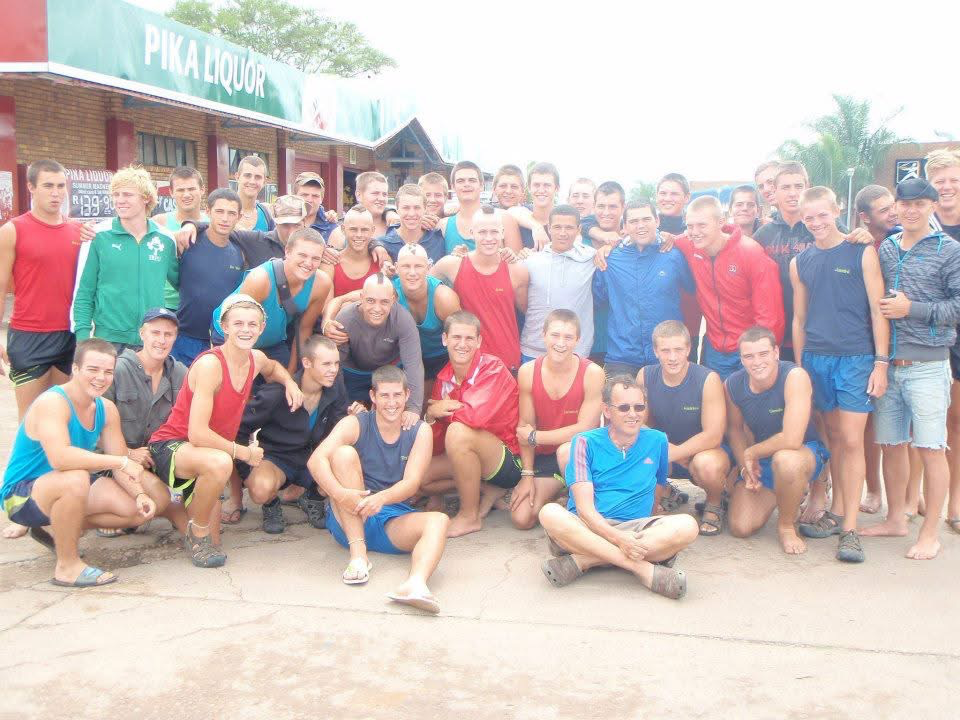
I felt compelled to write about this—partly to reflect, but mostly to find answers for myself. Right now, I’m facing another challenging season, both personally and professionally. Revisiting that earlier experience feels necessary. Maybe by unpacking what helped me persevere then, I’ll rediscover the strength I need now. Or perhaps I’ll find comfort in the stories of others—those who’ve endured storms far greater than mine and still found a way forward.
Most of us know the story of the apostle Paul, who wrote much of the New Testament under the inspiration of the Holy Spirit. What some may not realize is that Paul—originally known as Saul—once persecuted Christians, even approving of their imprisonment and execution. But after a dramatic encounter with Jesus on the road to Damascus (Acts 9), his life was radically transformed. He became a devoted follower of Christ and began boldly proclaiming the Gospel wherever he went. As you can imagine, this message of a sovereign God often clashed with the authorities of the time, who resisted any challenge to their power. As a result, Paul was frequently imprisoned, beaten, and persecuted for his faith (2 Corinthians 11:23–27), yet he remained steadfast in his mission.
It goes without saying that the apostle Paul endured many difficult seasons. Yet I find great encouragement in his words from Romans 5:3–5:
“Not only that, but we rejoice in our sufferings, knowing that suffering produces endurance, and endurance produces character, and character produces hope. And hope does not put us to shame…”
Paul’s perspective reminds me that trials are not wasted—they shape us, strengthen us, and lead us to a hope that never disappoints.
Another life I deeply admire is that of Viktor Frankl, the renowned Holocaust survivor and author of Man’s Search for Meaning. Reading his book convinced me that even in the darkest seasons of life, we can—and should—search for meaning. He also helped me realize that, no matter the circumstances, we always have the freedom to choose our attitude, even when it feels like the odds are stacked against us.
He captures this truth powerfully in the following passage:
“Even though conditions such as lack of sleep, insufficient food and various mental stresses may suggest that the inmates were bound to react in certain ways, in the final analysis it becomes clear that the sort of person the prisoner became was the result of an inner decision, and not the result of camp influences alone. Fundamentally, therefore, any man can, even under such circumstances, decide what shall become of him—mentally and spiritually. He may retain his human dignity even in a concentration camp.”
He goes on to share that inmates were often faced with a crossroads: to turn life inside the camp into an inner triumph and gain victory over their experiences, or to ignore the challenges of everyday life and simply vegetate. Sadly, many chose the latter—and never saw the light of day.
If we continue studying the lives of Paul the Apostle and Victor Frankl, we will eventually come to know that they both had certain hopes to live for and this seemed to carry them through the harshest of times. For example:
- Paul had the hope of eternal life with Christ and the hope of seeing others come to salvation.
- Victor, along with the other prisoners, clinged onto the hope that they would be home again by Christmas.
When going through the difficult seasons of life, It’s incredibly important to have something hopeful to cling to—so ask yourself: What is the light at the end of the tunnel? And in the same breath, are you strong enough to cope when that light isn’t yet visible? Here I must warn my audience to be mindful of discouragement and disappointment slowly creeping in. This had a devastating impact on many inmates in the concentration camps, weakening their will to resist—and tragically, many did not survive.
So if you’re reading this and thinking, that’s me, remember: there is always something to be grateful for, even in life’s most difficult storms. Viktor Frankl shares moments of this in Man’s Search for Meaning:
- “In those ghastly minutes, I found a little bit of comfort; a small piece of bread which I drew out of my pocket…”
- “All through the night and late into the next morning, we had to stand outside, frozen and soaked to the skin after the strain of our long journey. And yet we were all very pleased! There was no chimney in this camp…”
- “We were grateful for the smallest of mercies.”
So, what can we learn from those who’ve endured storms far greater than we could ever imagine?
- Embrace suffering—it often shapes endurance and molds character. Don’t underestimate your capacity to use the opportunity to your advantage (fuel for your unique greatness according to Ryan Holiday in his book Ego is the enemy).
- In any given set of circumstances, you can choose your attitude. This is an inner decision, and it’s one of the few freedoms no one can take from you.
- Hold on to hope or a future goal you can look forward to. It’s often the source of inner strength that helps us persevere and overcome obstacles.
- When walking a difficult road, remember: there is always something to be grateful for. Gratitude can spark joy, even in the darkest moments. Never allow the enemy to steal your joy and celebrate those victories along the way.
When I think back to my experience in the remote Kalahari, I can honestly say:
- I had no choice but to embrace the pain and suffering—for 18 days straight. It was do or die: give up and go home.
- It wasn’t easy, and I certainly had my moments. After all, the world had just taken my best friend from me. But I did my best to maintain a positive attitude.
- I held onto the hope that completing the program would make him proud. In addition, I looked forward to seeing my family and friends again.
- Most of all, I felt deep gratitude for the “little” things I would’ve otherwise taken for granted: a sip of fluid after an intense PT session, a bucket of water to wash with at night, and even staying healthy (and relatively strong) while others around me fell ill.
After even more self-reflection, I can confidently say that life’s most trying seasons reveal who we truly are. They strip away the surface and expose the depth of our resilience, our faith, and our capacity to endure. That was certainly true for me in the Kalahari. And I believe it was true for Paul in prison, and for Viktor Frankl in the camps.
Be encouraged—diamonds are formed through steady pressure over time. Growth often comes not in ease, but in endurance. As G. Michael Hopf reminds us:
“Good times create weak people. Weak people create bad times. Bad times create strong people. Strong people create good times.”
So if you’re in a hard season right now, don’t rush through it. Don’t numb it. Let it shape you. Let it teach you. Because the strength you’re searching for isn’t somewhere out there—it’s already within you, waiting to be revealed, if you’ll let it.
 The Young Professional
Leave a comment