
In the following section, you will find a summary of the most influential books I have read over the last couple of years.
The greatest part of a writer’s time is spent reading. In order to write; a man will turn over half a library to make one book
Samuel Johnson
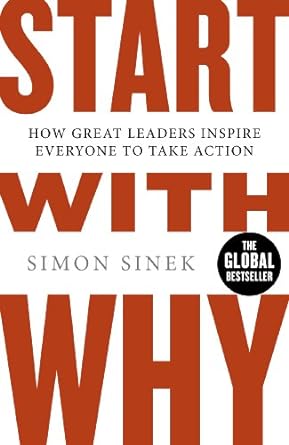
Start with Why
Written by Simon Sinek, ‘Start with Why’ introduces a ‘golden circle’ comprising an inner layer (depicting why), a middle layer (depicting how), and an outer layer (depicting what). The book highlights several organizations that can articulate precisely what they do and how they do it, but often overlook why they do what they do. Ultimately, they lose sight of the initial motivation behind specific movements or initiatives, and operations suffer as a result. To build successful organizations with loyalty at their core, we must start with and adhere to a clearly defined ‘why’.

Extreme Ownership
Two former U.S. Navy SEALs share their insights from the battlefield. These lessons are highly applicable to business (as “business is basically war without bullets”) and even everyday life (since “combat is reflective of life, only amplified and intensified”).
The book emphasizes that exceptional leaders take absolute ownership of everything. This includes any impact on the mission they are ultimately responsible for. Often, this becomes challenging, especially when owning up to mistakes and failures of other team members. However, you might be surprised to discover that admitting team mistakes can earn you respect, demonstrating immense humility and courage.
To be a good leader, your ego must take a back seat. As the author puts it, “The best leaders are not driven by ego or personal agendas.” This book challenged me to examine my own ego.
Furthermore, the book contains tried and tested principles that you can apply to lead and succeed.

Shoe Dog
A gripping memoir by the creator of Nike, Phil Knight. The book is light and easy to read, yet filled with plenty of laughter, drama, excitement, anxiety, action, and moments of vulnerability.
This heartfelt story revolves around aspiring success from an early age, specifically leaving a mark on the world and a desire to win.
As the book nears its conclusion, it becomes clear that the success of Nike is underpinned by “life-altering partnerships.” Together, these partners form a winning combo.

Atomic Habits
This book addresses some flaws associated with the common practice of goal-setting (e.g., achieving a goal only changes your life momentarily). Instead, the author invites the reader to adopt a “systems” way of thinking. Specifically, the book encourages implementing a system that fosters a culture of continuous small improvements (often referred to as “1% improvements”).
The author emphasizes building identity-based habits rather than outcome-based habits. This approach allows us to focus on who we aspire to become in the long run. For instance, making your bed each morning embodies the identity of an organized person. The goal is to integrate our habits into our very identity.
Furthermore, the author challenges readers to scrutinize underlying bad habits by asking a crucial question: “Is this habit leading me toward success?”
Without a shadow of doubt, this book has equipped me with practical tools and strategies to construct better systems and ultimately shape improved habits.
In a profound yet accurate conclusion, the author states: “Success is not merely a goal to reach or a finish line to cross. It is an ongoing system of improvement—an endless process of refinement.”
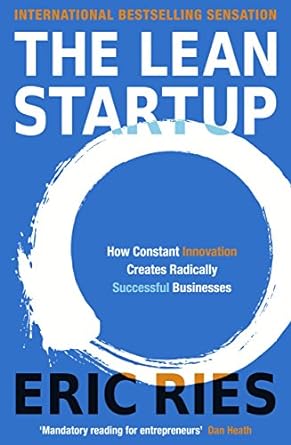
Lean Startup
“The Lean Startup” by Eric Ries introduces a framework that organizations (not just startup enterprises) can leverage to generate sustainable value and growth while eliminating waste. Among other things, the book highlights the importance of continuously testing specific hypotheses and iterating through a “build-measure-learn” feedback loop as quickly as possible. As a result, organizations can pivot or persevere more regularly.

The Black Swan
“The Black Swan” by Nassim Taleb is a thought-provoking book that instills a deep awareness of highly unlikely events with lasting impact. It challenges readers to assess their current positioning in terms of both negative and positive consequences.
The author critiques those involved in forecasting, highlighting obvious flaws and errors in well-known forecasting models and methods. While we often consider a model well-trained or good based on its historic success rate, we rarely isolate and examine the cumulative sum of historic error rates.
This book critically underscores the popular saying: “You don’t know what you don’t know.” The author emphasizes the significant gap between what we believe we know and the true extent of our knowledge.
Furthermore, the author points out that as a society, we often delude ourselves into thinking we retrospectively understand the buildup to catastrophic historic events, when in reality, we do not.
The practical and extreme example of a turkey being slaughtered on Christmas Day illustrates that any entity can experience a false sense of confidence (in the form of safety) just before a catastrophic impact. In essence, we tend to focus on favorable evidence (scenarios that turned out well), ignoring the subset of evidence that contradicts these positive outcomes (scenarios that went wrong).
While the book doesn’t necessarily provide a roadmap to prevent black swan events, it does equip readers for better preparation—a direct result of improved anticipation.
 The Young Professional